
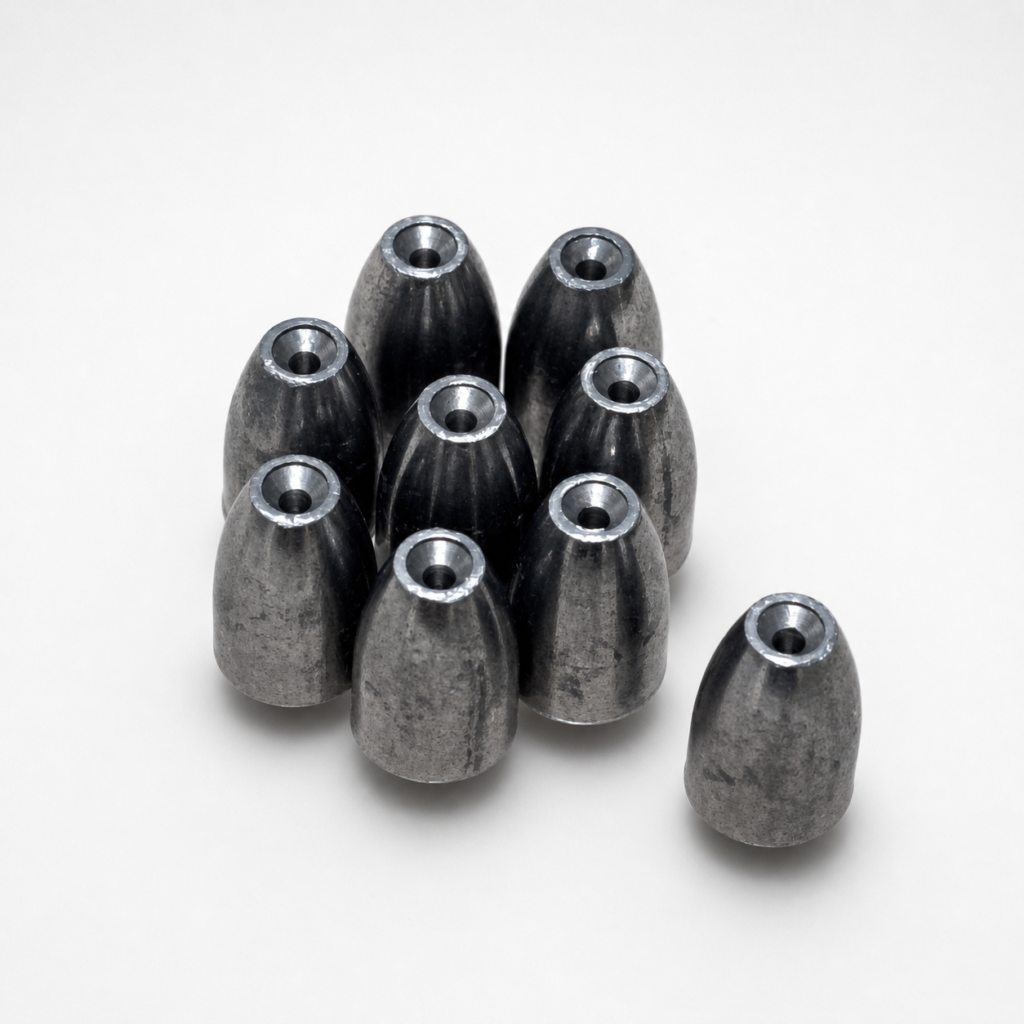
Airgun Slug Ballistic Coefficient Explained
Ballistic coefficient is a measure used to describe how efficiently a projectile moves through the air relative to a standard drag model. For PCP shooters, a higher usable BC generally means better velocity retention, less wind drift and more retained energy.
BC is not a permanent score attached to a slug. The reported value depends on the drag model, velocity range, measurement method and projectile stability.
What BC predicts
BC helps predict:
- Velocity loss
- Trajectory
- Time of flight
- Wind drift
- Retained energy
BC does not guarantee small groups, correct barrel fit, expansion or stability in every twist rate.
Why slugs usually have higher BC
A diabolo pellet is intentionally draggy. Its narrow waist and flared skirt provide stability but slow it quickly.
A slug has a more streamlined profile and usually a smaller ratio of frontal drag to mass. When stable, it retains velocity more efficiently.
What G1 BC means
Most airgun slug data use a G1 BC. G1 is a reference drag model based on a particular projectile shape. A ballistic calculator compares the real projectile’s deceleration with that reference.
Many airgun slugs do not closely resemble the G1 reference, especially at subsonic velocity. A single G1 number is still useful, but it is an approximation.
When comparing figures, confirm that:
- The same drag model is used
- Velocity ranges are similar
- Values were measured rather than estimated
- The projectile was stable
BC changes with velocity
Drag does not remain proportional across every speed. A slug’s apparent BC can change as it slows.
A BC measured at one velocity may not predict perfectly when the same slug is launched much faster or slower. The most relevant figure is measured in a velocity band similar to the rifle’s actual flight.
Stability affects measured BC
A yawing slug presents more area to the airflow and experiences additional drag. Its measured BC will be lower and less consistent than the theoretical value of the same shape flying point-forward.
Two rifles can therefore produce different downrange results with the same slug because their twist rates, bore fit and launch behavior differ.
BC and wind drift
Wind drift depends on flight time and deceleration. A higher-BC slug generally reaches the target sooner and resists velocity loss better than a lower-BC projectile under comparable conditions.
BC does not eliminate wind reading. At typical PCP velocities, even a high-BC slug can move significantly in uncertain wind.
Why advertised values differ
Manufacturers may use different:
- Measurement distances
- Chronographs
- Velocity windows
- Drag models
- Atmospheric corrections
- Test barrels
Look for transparent methods. A credible claim should identify projectile weight, velocity range and measurement method.
How to verify BC
A common approach measures velocity near the muzzle and again at a known downrange distance. Software can estimate BC from the observed deceleration.
For a useful test:
- Use reliable, aligned chronographs.
- Measure distance accurately.
- Shoot enough rounds to identify variation.
- Record atmospheric conditions.
- Confirm the slug is stable.
- Use the correct drag model.
- Repeat the test.
Is boat-tail automatically higher BC?
A boat-tail can reduce base drag in suitable conditions, but the gain is not automatic. The design must still seal the bore, load without damage and stabilize.
A boat-tail may also make a projectile longer, increasing its spin requirement.
Frequently asked questions
What is a good BC for an airgun slug?
There is no universal threshold. Compare measured values among projectiles intended for the same caliber and velocity range.
Does higher BC mean better accuracy?
It can reduce wind deflection, but it cannot correct poor manufacturing, barrel mismatch or instability.
Why does my ballistic calculator miss?
Possible causes include inaccurate BC, incorrect muzzle velocity, range error, changing weather, sight-height error or scope-tracking error.
Final takeaway
BC is a prediction tool, not a trophy number. Choose accuracy first, validate velocity second and use BC to refine trajectory and wind predictions.