Why PCP Air Rifle Slugs Keyhole

When a PCP air rifle slug leaves an elongated or side-on hole in the target, it is keyholing. The projectile is yawing or tumbling instead of flying point-forward.

The most common causes are insufficient spin stabilization, a slug that does not fit the barrel, inadequate or inconsistent velocity, damage during loading, or a disturbance at the muzzle. The cure is not simply “add more power.” A structured diagnosis is faster, safer, and less expensive.

What a keyhole tells you

A clean, round hole suggests the slug reached the target with its axis close to the direction of travel. An oval or clearly profile-shaped hole shows substantial yaw.

Keyholing is a symptom, not a diagnosis. It tells you the projectile is unstable, but not why.

Minor yaw can also occur without a dramatic sideways hole. Warning signs include:

  • Groups that expand suddenly with distance
  • Unexplained horizontal or vertical flyers
  • Ragged or asymmetric target holes
  • Poor ballistic-coefficient results
  • Large point-of-impact changes between batches

1. The slug is too long for the barrel’s twist rate

Spin requirements relate more closely to projectile length than weight alone. Two slugs of identical weight can have different lengths because of nose shape, hollow-point depth, base design, or material density.

A long slug in a slow-twist pellet barrel may not rotate fast enough to remain stable. This is especially common when shooters select the heaviest available slug simply because they expect better downrange performance.

First test: move to a shorter or lighter slug of the same caliber and diameter. If the target holes become round, stability—not raw accuracy tuning—was likely the main problem.

2. Velocity is too low

Spin rate depends on both twist rate and forward velocity. With the same barrel, a faster projectile also rotates faster.

A low-powered tune may therefore fail to stabilize a long slug. This does not mean the rifle should automatically be turned to maximum output. Instead, test within the manufacturer’s approved adjustment range and legal energy limit.

In one sub-12 ft-lb community report, a 20-grain slug remained usable while a heavier projectile keyholed. That experience illustrates why weight must be matched to available power rather than selected in isolation.

3. The slug is undersized

An undersized slug may not engage the rifling consistently. It can suffer from a poor air seal, variable launch pressure, and inadequate spin.

Possible signs include:

  • Unusually easy chambering
  • Low velocity for the tune
  • High shot-to-shot velocity variation
  • Little or uneven rifling engraving on a recovered slug

Test adjacent diameters when the manufacturer offers them. A difference of one thousandth of an inch can materially change performance.

4. The slug is oversized

An oversized slug may engrave too aggressively, increasing friction and deforming during chambering. It can also require more force than the loading mechanism applies consistently.

Possible signs include:

  • Hard or rough bolt closure
  • Visible shaving or scoring
  • Lower-than-expected velocity
  • High air consumption
  • Sudden flyers despite otherwise stable chronograph readings

Never force ammunition into a chamber. If loading resistance is abnormal, stop and verify the actual dimensions.

5. The magazine or probe damages the slug

Long slugs can tilt inside a magazine or strike the edge of the chamber. A small dent in the nose may be harmless, but base deformation or asymmetric engraving can disrupt flight.

Compare magazine-fed groups with carefully single-loaded groups. If the single-loaded ammunition performs better, inspect:

  • Magazine length and alignment
  • Probe shape
  • Chamber entrance
  • Marks on cycled but unfired slugs

This test can prevent unnecessary changes to the regulator or barrel.

6. Velocity variation is too high

Even a theoretically stable slug can behave poorly when launch conditions change from shot to shot.

Use a chronograph and record a full string rather than two or three shots. Look for regulator creep, an uneven power curve, or a tune operating outside the rifle’s efficient pressure range.

Velocity consistency will not rescue an incompatible slug, but erratic velocity can make a compatible one appear unsuitable.

7. The muzzle crown or moderator is disturbing the slug

The final moment inside the barrel is critical. A damaged crown can release gas asymmetrically. A poorly aligned moderator or air stripper can clip the slug or disturb the gas flow around it.

Check for:

  • Fresh lead marks inside the moderator
  • Loose barrel or shroud components
  • An uneven or damaged crown
  • A point-of-impact shift after installing an accessory

Any suspected clipping should be addressed before further accuracy testing.

8. Lead fouling or lubricant incompatibility

Some slug-and-barrel combinations deposit lead quickly. Accuracy may begin well and deteriorate after a relatively small number of shots.

Do not assume every barrel needs the same cleaning schedule. Establish a baseline for your rifle and watch for a repeatable decline in group size. Use only cleaning methods and products approved by the manufacturer.

Adding lubricant is not a universal solution. Excess or inconsistent lubricant can change friction and velocity. If you test lubrication, control the quantity and compare it against untreated ammunition from the same batch.

9. The target is too close to reveal the true pattern—or too far for diagnosis

At very short range, a slug can pass through the target before instability becomes obvious. At long range, wind and shooter error can disguise the original problem.

Begin at a safe intermediate distance where every shot can be inspected. Confirm round holes before moving farther. If the slug is already sideways at the first target, do not continue increasing distance.

A step-by-step keyholing diagnosis

Follow this order:

  1. Stop using any slug that chambers with abnormal resistance.
  2. Inspect the moderator, shroud, and muzzle area for contact.
  3. Shoot a control group with the rifle’s proven pellet.
  4. Test the slug by single-loading it.
  5. Record a chronograph string.
  6. Try a shorter or lighter slug.
  7. Test the same weight in an adjacent diameter.
  8. Clean the barrel according to manufacturer guidance.
  9. Change only one tune parameter at a time.

This sequence begins with mechanical and safety checks, then isolates ammunition and tuning variables.

Frequently asked questions

Will increasing FPS stop keyholing?

Sometimes, if the slug is marginally under-stabilized. It will not fix a badly mismatched diameter, damaged projectile, muzzle strike, or unsuitable barrel.

Can a slug be accurate while slightly unstable?

It may group acceptably at short range and then deteriorate rapidly. Stable target holes and repeatable groups at the intended distance are more meaningful than one impressive short-range group.

Does a heavier slug need a faster twist?

Often, but length is the more useful variable. A heavy compact lead slug may stabilize more easily than a lighter but longer projectile made from a lower-density material.

Should I tune the rifle or change ammunition first?

Start with ammunition within the rifle maker’s recommended range. Trying a different weight or diameter is usually easier and more reversible than making major tune changes.

Final takeaway

Keyholing means the slug is not stable, but the cause can lie anywhere from the magazine to the muzzle. Start with fit, projectile length, loading damage, and chronograph consistency before adding power.

A methodical process protects the rifle, reduces wasted ammunition, and produces information you can actually use.

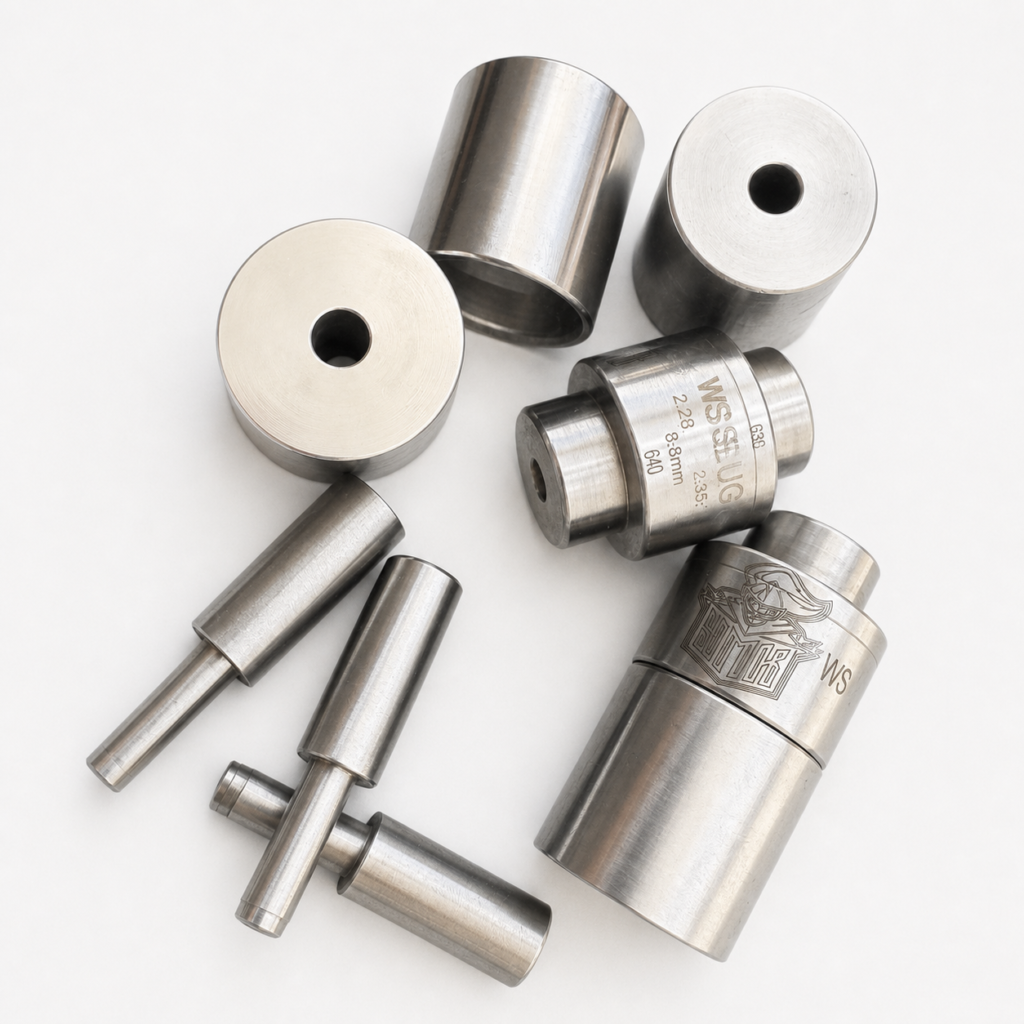
Exploring Precision Engineering: The Heart of Holyslug

Introduction to Precision Engineering

Precision engineering is a discipline that focuses on the creation of accurate and reliable components that are integral to various industries. This field is particularly vital for brands like Holyslug, which manufactures highly specialized products such as slug swaging dies and precision shooting accessories. For enthusiasts of airguns, precision is a hallmark of quality, ensuring every shot is as effective as possible.


Holyslug’s Commitment to Quality

At Holyslug, the commitment to craftsmanship is unparalleled. Each product is designed with attention to detail and constructed using premium materials that elevate the standard of performance. This commitment to excellence results in precision engineering that not only meets the needs of serious airgun enthusiasts but also inspires trust and confidence in its user base.


The Global Reach of Holyslug

One of the standout features of Holyslug is its worldwide shipping policy. By making high-quality products accessible across the globe, Holyslug ensures that no enthusiast is left wanting. Their reputation as a reliable brand is bolstered by consistent quality and a focus on user satisfaction, making them a preferred choice for those who take their shooting seriously.

The Importance of Precision Engineering in High-End Manufacturing

Understanding Precision Engineering

Precision engineering is a critical aspect of modern manufacturing, particularly in industries where accuracy and reliability are paramount. It focuses on creating components with tight tolerances, ensuring that every piece operates seamlessly within the assembly. This level of precision is essential for both performance and safety, especially in applications like airgun accessories.


Craftsmanship and Quality

At the heart of successful precision engineering lies exceptional craftsmanship. High-quality materials paired with skilled artisans lead to superior products that stand out in the marketplace. Brands like Holyslug exemplify this dedication, offering precision slug swaging dies that are celebrated among serious airgun enthusiasts for their reliability and performance.


Global Impact and Manufacturing Standards

In today’s interconnected world, precision engineering not only serves local markets but also caters to a global audience. With advancements in technology, companies are able to uphold consistent quality standards across borders. This worldwide approach fosters trust and elevates brand recognition, as seen with Holyslug’s commitment to delivering top-notch shooting accessories to enthusiasts everywhere.

What Makes a PCP Air Rifle Slug-Ready?

A slug-ready PCP air rifle is not simply a powerful airgun that can chamber a slug. It is a rifle whose barrel, power system, magazine, and adjustment range can launch a correctly sized slug consistently and stabilize it throughout its flight.

That distinction matters. Many PCP rifles can physically fire slugs, but only some can deliver repeatable accuracy with them. A rifle that shoots diabolo pellets exceptionally well may produce large groups or even keyholes with slugs.

This guide explains what “slug-ready” actually means and how to evaluate a PCP before buying ammunition or changing its tune.

Quick answer

A PCP is genuinely slug-ready when it has:

  • A barrel with a suitable twist rate and consistent internal dimensions
  • Enough adjustable power for the intended slug weight
  • A bore and groove diameter that match available slug sizes
  • A magazine and loading port that do not damage long projectiles
  • A regulator and valve system capable of low velocity variation
  • A manufacturer-supported slug setup or a proven community test history

No single feature guarantees accuracy. Slug performance comes from the complete rifle-and-ammunition system.

Why pellet accuracy does not guarantee slug accuracy

Diabolo pellets and airgun slugs stabilize in different ways.

A diabolo pellet has a narrow waist and a flared skirt. Its high aerodynamic drag helps keep the nose pointing forward, so it can remain stable with relatively modest spin. A slug has a more bullet-like profile and depends much more heavily on spin stabilization.

This is why a pellet barrel can be superb at 50 meters yet struggle with a long, heavy slug. The slug may require a faster twist rate, a closer fit to the bore, or more velocity than the rifle can produce efficiently.

1. Barrel twist rate

Twist rate describes how far a projectile travels through the barrel while completing one full rotation. A 1:16 twist, for example, means one rotation in 16 inches.

Longer and heavier slugs generally require more spin than short pellets. However, “faster is always better” is not a reliable rule. Too little spin can cause yaw and keyholing, while excessive spin may amplify imperfections in the projectile or make a tune unnecessarily demanding.

When comparing rifles, look for:

  • A published twist rate
  • A dedicated slug barrel or slug liner
  • Manufacturer-recommended slug weights
  • Independent groups shot at more than one distance

If a manufacturer only says a rifle “can shoot slugs” without publishing compatible weights or barrel information, treat that statement as a starting point rather than proof.

2. Bore size and slug fit

Nominal caliber is not an exact measurement of every barrel or projectile. Two products labeled .22 caliber may differ by several thousandths of an inch, and that difference can determine whether the slug seals, engraves, and exits consistently.

A suitable slug should:

  • Enter the chamber without excessive force
  • Engage the rifling consistently
  • Create an effective air seal
  • Avoid being heavily deformed during loading

An undersized slug may leak air and produce inconsistent velocity. An oversized slug can create excessive friction, waste air, increase pressure demands, or become difficult to chamber.

Experienced testers often try a sample pack containing several diameters and weights before buying full tins. That is usually more useful than choosing solely by brand reputation.

3. Available power and airflow

Slugs normally have more barrel contact area than diabolo pellets. Many are also heavier. As a result, they often need more airflow and a different pressure curve.

A slug-ready PCP does not necessarily need maximum power, but it should provide enough adjustment to reach a stable operating window. Useful features may include:

  • Adjustable regulator pressure
  • Adjustable hammer spring or hammer weight
  • Adequate plenum volume
  • A valve designed for consistent high-flow operation
  • A barrel long enough to use the available air efficiently

More power is not automatically more accurate. The goal is a consistent, efficient tune in which the slug is stable and the extreme spread remains controlled.

4. Magazine and loading-path compatibility

Slug length can create problems even when diameter and weight are suitable. A long projectile may not fit the magazine, may contact its internal surfaces, or may be damaged as the probe pushes it into the chamber.

Before choosing a slug, check:

  • Maximum magazine length
  • Loading-port clearance
  • Probe alignment
  • Whether the slug nose or skirt is marked after cycling
  • Whether single-loading produces better groups

If a rifle groups well from a single-shot tray but poorly from its magazine, the barrel may not be the problem. Inspect the loading system for tilt or deformation.

5. Consistency of the regulator and valve

Accurate slug shooting requires more than a high average velocity. It requires consistent velocity from shot to shot.

A regulated PCP usually makes this easier, but the regulator must operate within a balanced tune. Raising regulator pressure without matching the hammer and valve can make the rifle inefficient or inconsistent.

Use a chronograph to look for:

  • A stable average velocity
  • Low extreme spread
  • Sudden velocity changes as reservoir pressure falls
  • First-shot or post-fill anomalies

Chronograph data should be evaluated alongside target groups. A small velocity spread is valuable, but it cannot correct a poor barrel-to-slug match.

How to test whether your PCP is slug-ready

Use a controlled process:

  1. Confirm that the manufacturer allows slug use.
  2. Start with lightweight or manufacturer-recommended slugs.
  3. Test more than one diameter if available.
  4. Record velocity with a chronograph.
  5. Shoot initial groups at a safe, moderate distance.
  6. Check the target for round holes and signs of instability.
  7. Extend the distance only after the slug is stable.
  8. Change one variable at a time.

Do not change ammunition, regulator pressure, hammer setting, and optic zero during the same comparison. You will not know which change produced the result.

Marketing claims to treat carefully

The phrases “slug capable,” “slug compatible,” and “slug ready” are not universal technical standards. They can mean anything from “the magazine accepts a slug” to “the rifle has a dedicated fast-twist barrel.”

Before purchasing, ask:

  • Which exact slug weights and diameters were tested?
  • At what velocity and power level?
  • With which barrel length and liner?
  • Were the published groups shot at 50, 100, or more yards?
  • Was the rifle in factory configuration?

Specific answers are much more valuable than a badge on a product page.

Frequently asked questions

Can every PCP air rifle shoot slugs?

Many can discharge them safely if the manufacturer permits it, but not every PCP will stabilize or group them accurately. Barrel design, power, and slug fit remain decisive.

Do I need a dedicated slug liner?

Not always. Some conventional rifled barrels shoot selected slugs very well. A dedicated liner simply increases the likelihood that the twist rate and internal geometry suit bullet-shaped projectiles.

Are heavier slugs always better at long range?

No. A heavier slug may retain energy well, but only if the rifle can launch and stabilize it consistently. A lighter, better-matched slug can outperform a heavier unstable one.

What is the best caliber for PCP slugs?

There is no universal best caliber. .22 offers broad availability and moderate air use; .25 and .30 can carry more mass but typically require more power and air. Local laws and the intended use should guide the decision.

Final takeaway

A slug-ready PCP is a matched system, not a marketing label. Prioritize a suitable barrel, consistent airflow, correct projectile fit, and damage-free loading. Then verify the combination with a chronograph and controlled group testing.

The best slug rifle is ultimately the one that produces repeatable results with a clearly identified projectile—not the one with the longest specification sheet